

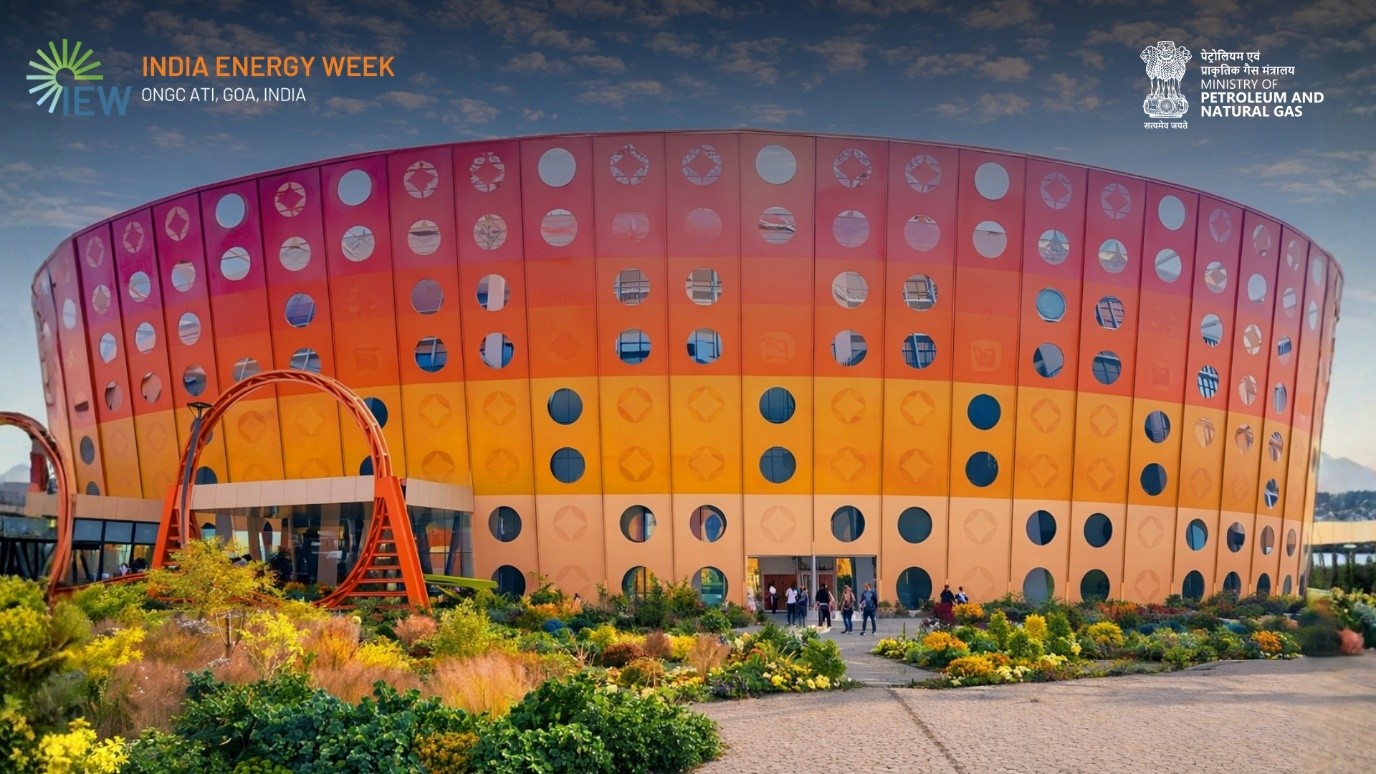
Where Global Energy Dialogue Met Architecture:
International Convention and Expo Centre, Goa
Goa, India | January 2026
The successful conclusion of India Energy Week 2026 at the International Convention and Expo Centre, Goa has positioned the venue as one of India’s most significant contemporary civic and architectural destinations for global engagement. As the host of one of the world’s largest energy gatherings, the centre demonstrated how architecture can actively support dialogue, scale, and collaboration at an international level.
Held from 27 to 30 January 2026, India Energy Week 2026 brought together more than 75,000 energy professionals, policymakers, industry leaders and innovators from over 120 countries, alongside 700+ global exhibitors. The magnitude and diversity of participation demanded a venue capable of balancing scale with clarity, intensity with comfort, and global ambition with local identity.The International Convention and Expo Centre, Goa, rose to this challenge with distinction.
Architecture as an Enabler of Exchange
Located between the Arabian Sea and the forested hills of South Goa, the International Convention and Expo Centre, Goa is conceived as a contextual response to its landscape rather than a detached mega-structure. The architecture draws from regional craft traditions and climatic intelligence, translating them into a contemporary language suited to large-scale international events.
The Convention Centre, the largest of its kind in Goa, accommodates up to 5,000 delegates within a circular plan inspired by Konkan Kaavi art. A permeable facade moderates daylight and heat while referencing local craftsmanship. Internally, a triple-height lobby articulated through water features and sculptural, tree-like columns establishes a calm and immersive arrival experience, grounding global gatherings within Goa’s natural ethos.
The adjoining 12,000-square-metre Exhibition Hall provides a highly flexible and efficient platform for exhibitions, national pavilions, and immersive industry showcases throughout India Energy Week 2026. Its structural clarity and fluid circulation supported seamless movement across diverse programmatic zones.
The International Convention and Expo Centre, Goa has been designed by CP Kukreja Architects, a practice known for delivering some of India’s most complex and institutionally significant public projects. The firm has also designed Yashobhoomi, New Delhi’s landmark convention and exhibition complex, which received the International Architecture Award in 2025, one of the highest global recognitions in architecture.
Across these projects, CP Kukreja Architects Architects have demonstrated a consistent design philosophy that integrates scale, sustainability, and cultural context, positioning architecture as an active contributor to national and global narratives.
Sustainability as a Core Design Principle
Sustainability is integral to the centre’s planning and performance. The campus incorporates on-site renewable energy generation, water-sensitive design strategies, and the use of locally sourced materials. These measures ensure long-term environmental responsibility and align the architecture with the progressive themes explored during India Energy Week.
Reflecting on the event, Dikshu Kukreja, Managing Principal, CP Kukreja Architects, said:
“The International Convention and Expo Centre, Goa was envisioned as a setting where architecture supports conversation at a global scale while remaining deeply anchored in place. Hosting India Energy Week here affirms the role of thoughtful design in shaping meaningful exchange, collaboration, and long-term impact.”
With the successful hosting of India Energy Week 2026, the International Convention and Expo Centre, Goa now stands as a benchmark for future-ready civic architecture in India, offering a compelling synthesis of global ambition, regional identity, and sustainable design.
That's a huge number, which is translating to India needing another Chicago every year to take care of that kind of influx. Those are mind-boggling statistics. Generally, we believe that cities are the magnets where people need to converge. But if a country has to progress, people have to progress. We need to understand our coexistence with nature. That is what biodiverse cities talk about. Nature and built development need to coexist. Buildings can’t be made at the expense of nature. And that coexistence, coupled with the concepts of sustainability, is something we need to consider if we are talking about livable cities.
Our blog
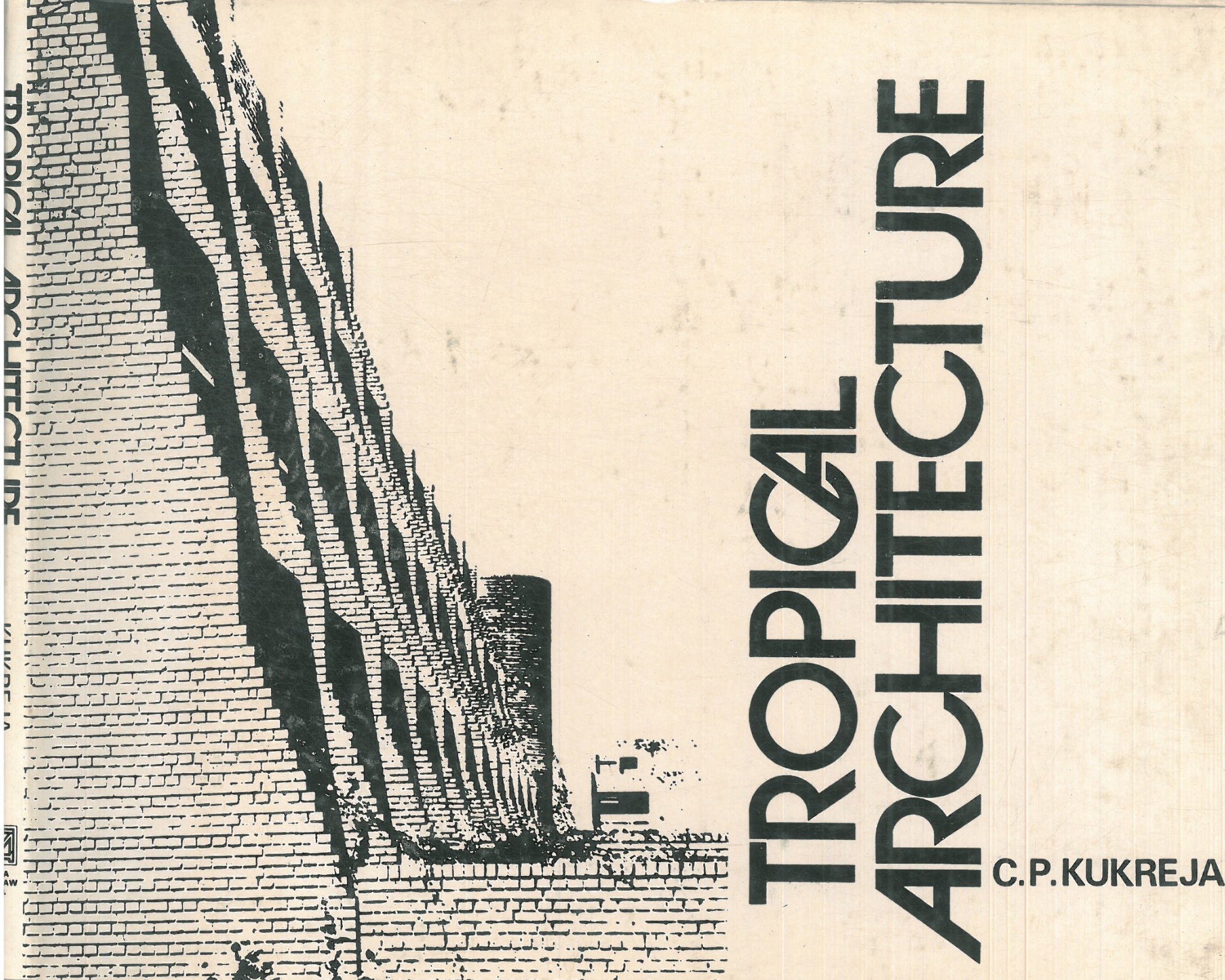
What Makes 'Tropical Architecture' By C P Kukreja A Timeless Treatise
- BLOGS
- NOVEMBER 11, 2022
Published in 1978, the book 'Tropical Architecture', is based on our founder CP Kukreja's master's thesis at the University of Manitoba, Canada - 'Design of Buildings in the Tropics.'It brings to attention many design solutions as a reference for designing in tropical climates or regions
How Can We Shape Flood-Resilient Cities
- BLOGS
- OCTOBER 20, 2022
The India Meteorological Department (IMD) recorded 7% surplus rainfall during Monsoon in India this year, which left many cities submerged. Earlier, only rural areas and unplanned cities fell prey to floods because of the lack of proper stormwater infrastructure.
How Can India Push Its Infrastructural Growth to the Next Level
- BLOGS
- SEPTEMBER 09, 2022
The key to India's transformation from a developing nation to a developed one lies in strengthening its infrastructure across sectors
Why the Smart Cities Mission Has Not Solved Dehradun’s Urbanisation Woes
- BLOGS
- SEPTEMBER 09, 2022
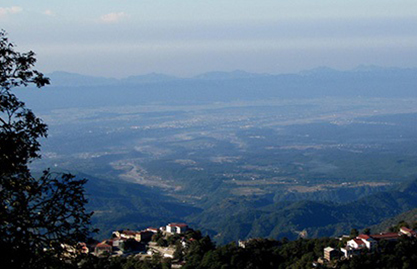
Himalayan foothills in India are replete with scenic cities, towns and villages. Dehradun, the capital of the mountainous state of Uttarakhand, is one such city.
How to Design a New-Age Transport Hub
- BLOGS
- SEPTEMBER 09, 2022
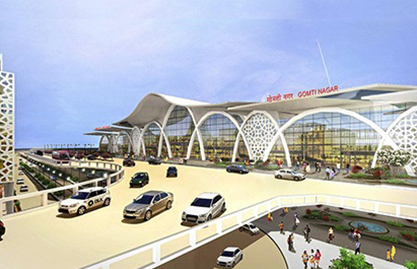
A transportation hub is an area where passengers and goods transition between different modes of transportation. Some examples include bus terminals, railway stations, metro stations and airports.
Three Ways to Create Holistic Learning Environments
- BLOGS
- SEPTEMBER 09, 2022
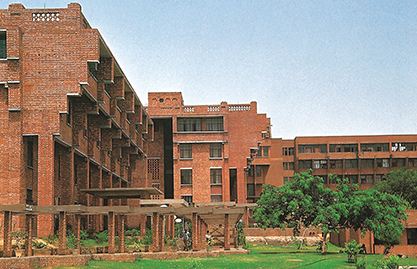
Educational institutes are the basic building block of any civil society. They extend opportunities for students who, as citizens, steer a nation towards its growth.