

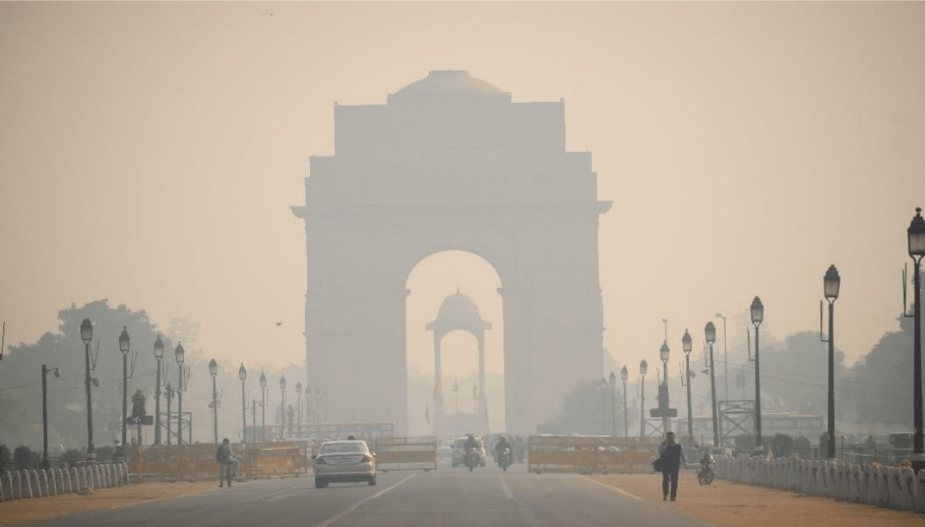
Delhi’s Smog is a Symptom of its Diseased Urban Planning
Every winter, Delhi’s air turns hostile. We speak of smog, of choking lungs, of emergency measures, of temporary fixes. We debate numbers on an AQI scale and brace ourselves for the next announcement; odd- even, construction bans, school closures. And yet, once the air clears marginally, so does our collective urgency.
This approach is deeply flawed.
Delhi’s air pollution crisis cannot be understood or solved through a seasonal prism. It is not an episodic failure of weather or a short-term administrative lapse. It is the outcome of systemic choices in how we have planned, governed, and moved through our city over decades. If we continue to rely on bandage solutions, we will continue to suffocate, slowly but surely.
What Delhi needs is not another annual firefight, but a coherent, structural response. Allow me to outline this through a few clear steps.
1. From “Open City” to Endless Sprawl
For years, Delhi has taken pride in being an open, green capital. But this openness has quietly decayed into unchecked sprawl. We have moved away from time-tested principles of compact, high-density urban planning and instead produced a city where daily commutes of 50 to 70 kilometres have become normal.
As economic prosperity rises, the first symbol of success often becomes a personal vehicle. Not because people reject public transport, but because the city leaves them little choice. This dependence on private vehicles has inevitably led to congestion; and congestion, not just vehicle numbers, is one of the primary contributors to vehicular pollution.
The solution is not to scold citizens or restrict them intermittently. It is to provide a sustainable, affordable, and safe alternative: an active, vibrant, and reliable public transport ecosystem.
2. Public Transport Fails Without the Last Mile
Delhi often celebrates the expansion of its Metro network, and rightly so. But the conversation routinely misses a critical point, the last mile.
Unless our daughters, sisters and mothers can safely step out of their home and reach the metro gate without fear or inconvenience, public transport will never be the first choice. These challenges highlight the need for integrated mobility planning and how new-age transport hubs should be designed. Safety, walkability, lighting, footpaths, and universal access are not peripheral issues; they are central to reducing vehicular dependence.
3. Rethinking Land Use: The Case for Mixed-Use Cities
The introduction of Transit-Oriented Development (TOD) into Delhi’s Master Plan is a welcome and necessary shift. It signals a move away from a mid-20th-century planning model that rigidly separated residential, commercial, and institutional zones.
That model forces millions to traverse the city daily for work, healthcare, education, or recreation. The alternative is mixed-use development, neighbourhoods where people can walk or cycle to work, to school, to clinics, or to public spaces.
This is not merely an urban design preference. It is a public health imperative. Reduced travel distances directly translate into reduced emissions and healthier air.
4. Air Does Not Respect Administrative Boundaries
Air pollution cannot be tackled through isolated, micro-zonal interventions. We may measure AQI in specific localities, but air moves far beyond municipal or state borders.
Delhi is fortunate to sit within a larger metropolitan region, the NCR; where coordination across states is not just possible but essential. Fragmented action will always fail. A shared air-shed requires shared responsibility, shared data, and shared enforcement mechanisms.
5. Industry Must Be Enabled to Pollute Less
Industrial pollution remains a significant contributor, yet the conversation often defaults to blame rather than reform.
What industries need are incentives; fiscal, regulatory, and technological to adopt cleaner machinery and pollution-free processes. Encouraging sustainable production through policy support will yield far better results than punitive approaches alone. Private enterprise responds to clarity and consistency; both must come from the state.
6. Congestion Is a Governance Problem, Not a Road
Vehicular pollution is exacerbated not simply by traffic volume, but by congestion, and congestion is often the result of poor enforcement.
Across Delhi, roads are illegally encroached upon while state-of-the-art multi-level parking facilities sit underused just metres away. This is not a planning failure; it is a governance failure.
Effective enforcement of parking and traffic regulations would yield immediate dividends: smoother traffic flow, lower emissions, and safer streets. Official apathy cannot be allowed to undermine public health.
7. Dust Control Is About Management, Not Climate
Open dust along roads and vacant plots remains an overlooked contributor to poor air quality. Even cities in arid climates have demonstrated that this can be managed effectively through native vegetation, horticultural measures, and ground cover.
In Delhi’s climate, such interventions are relatively easy. What is missing is sustained management; protecting plantations, preventing grazing, and ensuring maintenance. Once again, the issue is not knowledge but execution.
A Final Thought
Some of the world’s largest cities have faced air quality crises of similar magnitude and emerged cleaner, healthier, and more liveable; not through seasonal measures, but through sustained, systemic reform. Delhi is no exception.
The question is not whether solutions exist. They do. The question is whether we are willing to move beyond optics and address the deeper structural causes of our polluted air.
Delhi does not need another winter emergency. It needs long-term urban thinking, coordinated governance, and the courage to plan for people, not just for vehicles.
By Dikshu C. Kukreja
Managing Principal, CPKA
Frequently Asked Questions
Q. Why does Delhi experience severe smog every winter?
Ans. Delhi experiences severe winter smog due to a combination of vehicular emissions, industrial pollution, construction dust, and seasonal stubble burning in nearby states. During winter, low wind speeds and temperature inversion trap pollutants close to the ground, preventing dispersion and causing toxic smog levels across the city.
Q. Is Delhi’s air pollution only a seasonal problem?
Ans. Delhi’s air pollution is not only a seasonal problem. While winter worsens air quality due to temperature inversion and stagnant winds, pollution persists year-round because of vehicular emissions, construction dust, industrial activities, and high population density. Seasonal factors intensify an existing, chronic urban air quality challenge.
Q. How does urban planning contribute to air pollution in Delhi?
Ans. Urban planning in Delhi contributes to air pollution through high-density development, inadequate public transport integration, excessive road dependency, limited green buffers, and poor land-use zoning. Car-centric planning increases vehicular emissions, while insufficient open spaces and ventilation corridors reduce natural air circulation, trapping pollutants within dense urban environments.
Q. What role does public transport play in reducing air pollution?
Ans. Public transport plays a critical role in reducing air pollution by lowering dependence on private vehicles. Efficient metro, bus, and non-motorised transport systems reduce traffic congestion, fuel consumption, and carbon emissions. Well-planned public transport networks directly improve urban air quality and support sustainable, low-emission city development.
Q. What is Transit-Oriented Development (TOD) and why is it important?
Ans. Transit-Oriented Development (TOD) is an urban planning approach that concentrates high-density, mixed-use development around public transport hubs. It is important because TOD reduces private vehicle use, shortens commute distances, lowers carbon emissions, and creates walkable, well-connected neighbourhoods that support sustainable mobility and cleaner urban air.
Q. Can better land-use planning improve Delhi’s air quality?
A. Yes, better land-use planning can significantly improve Delhi’s air quality. Mixed-use zoning reduces long daily commutes, while strategically located employment centres limit vehicular travel. Integrating green buffers, open spaces, and efficient public transport corridors helps improve air circulation, reduce emissions, and create healthier, more breathable urban environments.
Q. Why is traffic congestion a major pollution issue in Delhi?
Ans. Traffic congestion is a major pollution issue in Delhi because slow-moving and idling vehicles emit higher levels of pollutants. Overdependence on private cars, limited road capacity, and inefficient traffic management increase fuel consumption and emissions, significantly degrading air quality and contributing to persistent urban smog.
Q. How can dust pollution in Delhi be controlled?
Ans. Dust pollution in Delhi can be controlled through better construction management, regular mechanised road sweeping, paving of open areas, and strict enforcement of dust-control norms at construction sites. Expanding green cover, stabilising bare soil, and improving waste management also help reduce particulate matter in urban air.
Our blog
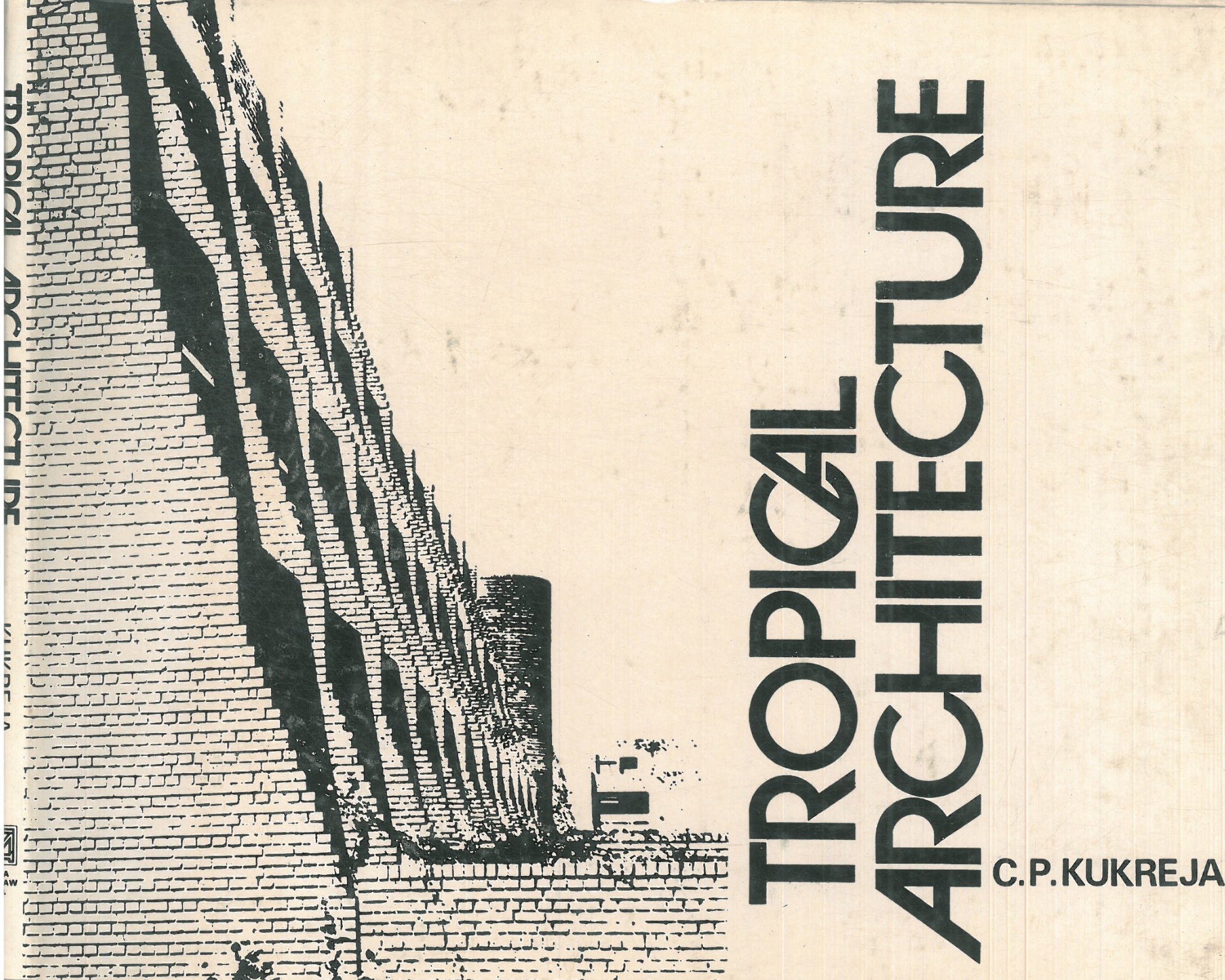
What Makes 'Tropical Architecture' By C P Kukreja A Timeless Treatise
- BLOGS
- NOVEMBER 11, 2022
Published in 1978, the book 'Tropical Architecture', is based on our founder CP Kukreja's master's thesis at the University of Manitoba, Canada - 'Design of Buildings in the Tropics.'It brings to attention many design solutions as a reference for designing in tropical climates or regions
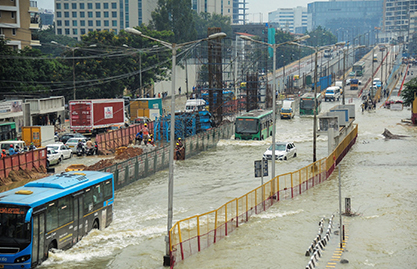
How Can We Shape Flood-Resilient Cities
- BLOGS
- OCTOBER 20, 2022
The India Meteorological Department (IMD) recorded 7% surplus rainfall during Monsoon in India this year, which left many cities submerged. Earlier, only rural areas and unplanned cities fell prey to floods because of the lack of proper stormwater infrastructure.
How Can India Push Its Infrastructural Growth to the Next Level
- BLOGS
- SEPTEMBER 09, 2022
The key to India's transformation from a developing nation to a developed one lies in strengthening its infrastructure across sectors
Why the Smart Cities Mission Has Not Solved Dehradun’s Urbanisation Woes
- BLOGS
- SEPTEMBER 09, 2022
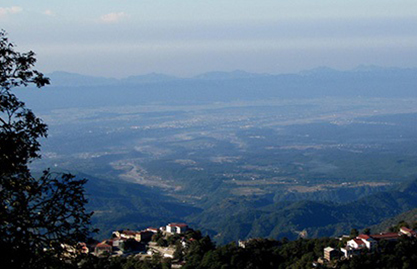
Himalayan foothills in India are replete with scenic cities, towns and villages. Dehradun, the capital of the mountainous state of Uttarakhand, is one such city.
How to Design a New-Age Transport Hub
- BLOGS
- SEPTEMBER 09, 2022
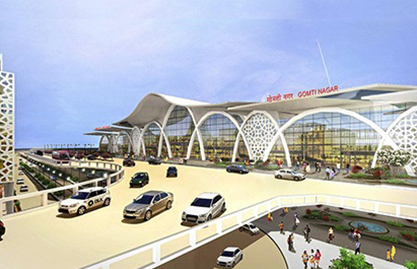
A transportation hub is an area where passengers and goods transition between different modes of transportation. Some examples include bus terminals, railway stations, metro stations and airports.
Three Ways to Create Holistic Learning Environments
- BLOGS
- SEPTEMBER 09, 2022
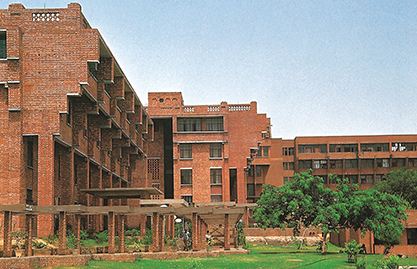
Educational institutes are the basic building block of any civil society. They extend opportunities for students who, as citizens, steer a nation towards its growth.